AI Agents Explained: Complete Beginner Guide
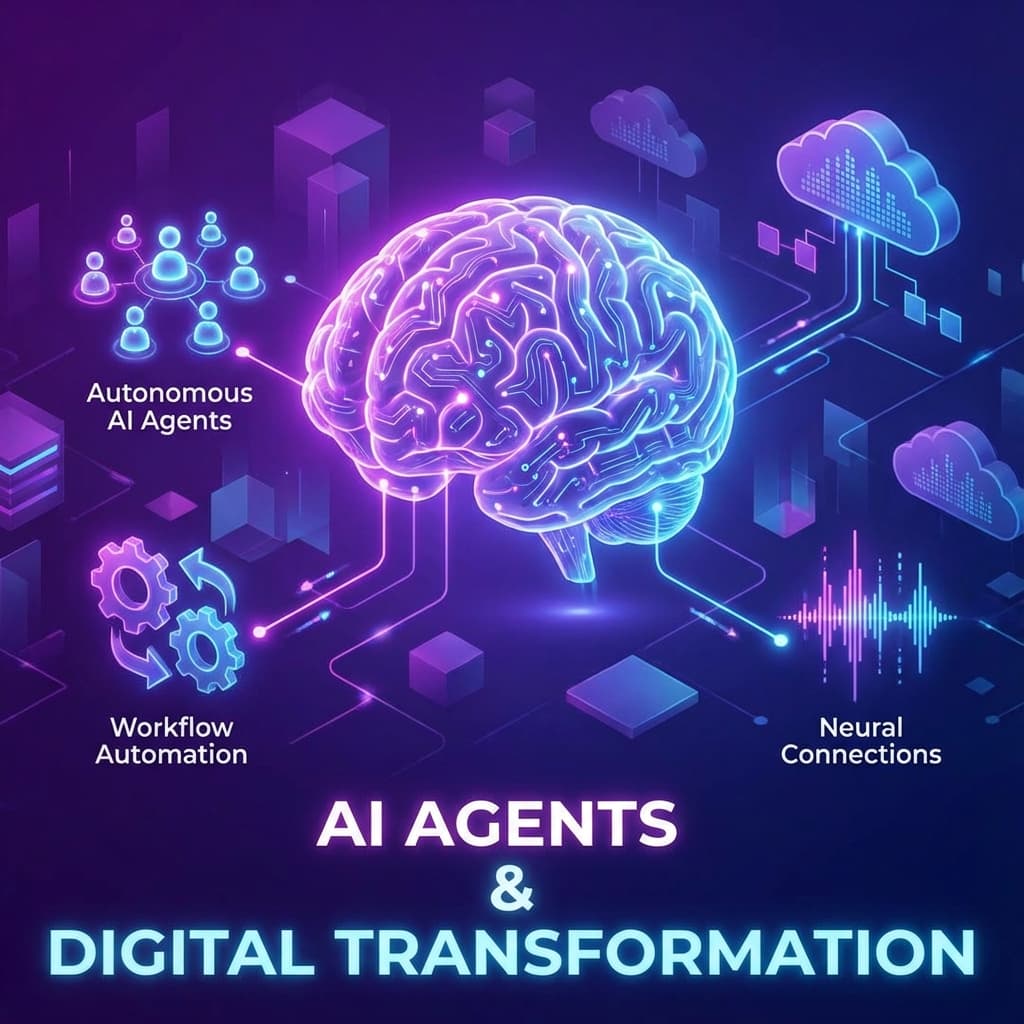
AI agents are the next evolution of artificial intelligence. Unlike simple chatbots, agents can think, plan, and act autonomously to achieve goals. Here's everything you need to know.
What is an AI Agent?
An AI agent is software that can:
- Perceive its environment (read data, receive inputs)
- Reason about what to do (using LLMs like GPT-4 or Claude)
- Act on decisions (call APIs, write files, take actions)
- Learn from outcomes (improve over time)
Simple Bot vs AI Agent
| Feature | Chatbot | AI Agent |
|---|---|---|
| Responses | Pre-programmed | Dynamic reasoning |
| Actions | Reply only | Execute tasks |
| Memory | Session-based | Long-term |
| Tools | None | External APIs |
| Goals | Answer questions | Complete objectives |
Types of AI Agents
1. Simple Reflex Agents
React to current input without memory. Example: Basic voice assistant responding to commands
2. Goal-Based Agents
Work toward specific objectives. Example: AI that researches a topic and writes a report
3. Learning Agents
Improve performance over time. Example: Trading bot that optimizes strategies
4. Multi-Agent Systems
Multiple agents collaborating. Example: CrewAI team with researcher, writer, and editor agents
Popular AI Agent Frameworks
| Framework | Best For | Voice Integration |
|---|---|---|
| LangChain | General purpose | ✅ via LangVoice |
| CrewAI | Team collaboration | ✅ via LangVoice |
| AutoGen | Conversational agents | ✅ via LangVoice |
| OpenAI Agents | Function calling | ✅ via LangVoice |
Building Your First Voice Agent
Here's a simple agent that can speak its responses:
from langchain_openai import ChatOpenAI
from langchain.agents import AgentExecutor, create_openai_tools_agent
from langvoice_sdk.tools.langchain_tools import LangVoiceLangChainToolkit

# Initialize voice tools
toolkit = LangVoiceLangChainToolkit(api_key="your-key")
tools = toolkit.get_tools()

# Create agent
llm = ChatOpenAI(model="gpt-4o")
agent = create_openai_tools_agent(llm, tools, prompt)
executor = AgentExecutor(agent=agent, tools=tools)

# Agent can now speak!
result = executor.invoke({
    "input": "Research quantum computing and explain it out loud"
})
Real-World AI Agent Use Cases
Customer Service
- Handle complex inquiries
- Access customer databases
- Process refunds and changes
- Speak responses via LangVoice
Content Creation
- Research topics
- Write articles
- Create podcast scripts
- Generate audio with AI voices
Development Automation
- Code review
- Bug fixing
- Documentation
- Deployment pipelines
Personal Assistants
- Schedule management
- Email summarization
- Research and analysis
- Voice notifications
The Future of AI Agents
By 2025, expect:
- More autonomous decision-making
- Better multi-modal understanding
- Improved voice interaction
- Wider enterprise adoption
Getting Started
- Choose a framework: LangChain for beginners
- Pick an LLM: Claude or GPT-4
- Add voice: LangVoice SDK
- Start simple: Single task agent
- Scale up: Multi-agent systems
AI agents represent the future of software. Start building today and stay ahead of the curve.
Tags
Ready to Transform Your Text to Speech?
Try LangVoice free and experience the most natural AI voices for your content.
Try LangVoice Free